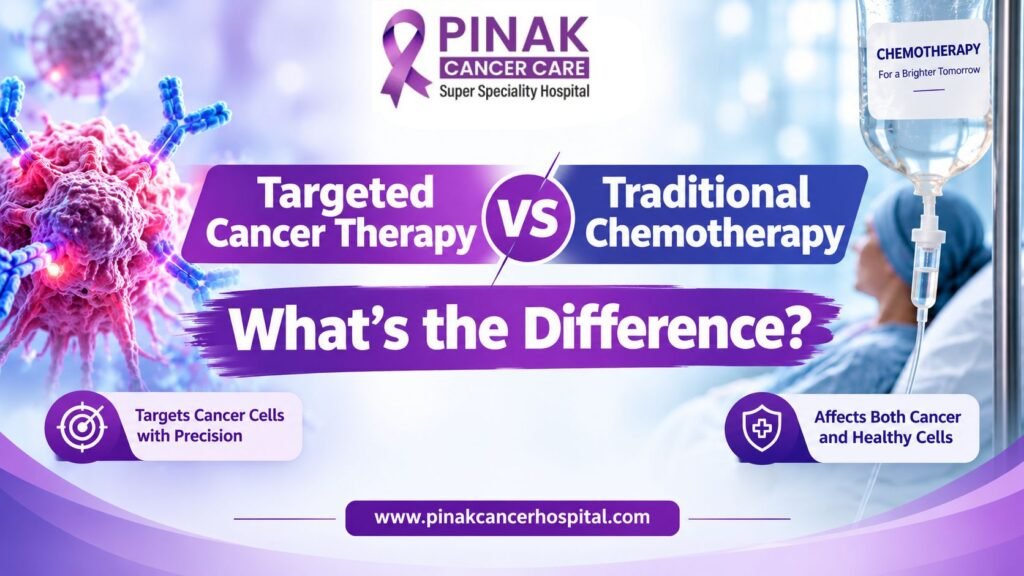
Cancer treatment has advanced significantly, giving patients more options to fight the disease. However, choosing the right treatment can be confusing, especially when doctors discuss targeted cancer therapy vs traditional chemotherapy. Both treatments help fight cancer, but they work in different ways and may cause different side effects. Understanding these differences can help patients and their families feel more confident when discussing treatment options with their doctor.
In this blog, we will explain how targeted therapy and traditional chemotherapy work, their key differences, possible side effects, treatment costs in India, and when doctors may recommend each option. You will also learn how doctors choose a suitable treatment based on the type of cancer and the patient’s test results. By the end, you will have a clearer understanding of these cancer treatments and know which questions to ask your oncologist.
What Is Targeted Cancer Therapy?
Targeted cancer therapy is a type of cancer treatment that uses medicines to identify and attack specific molecules or proteins that help cancer cells grow, divide, and spread. Unlike traditional chemotherapy, which generally affects rapidly dividing cells, targeted therapy focuses on particular features of cancer cells. It is an important part of precision medicine, which helps doctors choose treatment based on the characteristics of a patient’s cancer. However, targeted therapy is suitable only for certain cancers and may require biomarker testing before treatment.
How Does Targeted Therapy Work?
Cancer cells can develop changes in their genes or proteins that allow them to grow and multiply without normal control. Targeted cancer therapy works by blocking these changes or interfering with the processes that help cancer cells survive.
Depending on the medicine, targeted therapy may:
- Block growth signals: Stop signals that tell cancer cells to grow and divide.
- Help destroy cancer cells: Activate processes that cause cancer cells to die.
- Stop the growth of blood vessels: Reduce the formation of new blood vessels that supply a tumour.
- Deliver treatment to cancer cells: Some specialised medicines carry substances that damage or kill cells with a particular target.
What Are the Main Types of Targeted Cancer Therapy?
Targeted cancer therapy includes different types of medicines. The two major groups are small-molecule drugs and monoclonal antibodies.
1. Small-Molecule Drugs
These medicines are small enough to enter cancer cells and block specific proteins or signals that help them grow. Depending on the drug, they may be taken as tablets or capsules.
2. Monoclonal Antibodies
These are laboratory-made proteins designed to attach to specific targets on cancer cells or in the surrounding area. Some block growth signals, while others help the immune system recognise cancer cells or deliver substances that damage them.
The type of targeted therapy recommended depends on the cancer, the molecular target, and the available treatment options.
Which Cancers Can Be Treated With Targeted Therapy?
Targeted therapy is used for several types of cancer, but not every patient with these cancers will be eligible. Examples include:
- Breast cancer: Certain treatments target cancers with specific markers, such as HER2.
- Lung cancer: Some medicines target changes in genes such as EGFR or ALK.
- Colorectal cancer: Certain targeted medicines are suitable for tumours with particular molecular characteristics.
- Blood cancers: Targeted medicines are used to treat some types of leukaemia and other blood cancers.
- Kidney cancer: Certain medicines target pathways involved in tumour growth and blood vessel formation.
Does Targeted Therapy Require Biomarker Testing?
In many cases, yes. Biomarker testing helps doctors identify specific genes, proteins, or other features in a tumour that may respond to targeted cancer medicines.
Depending on the cancer, testing may involve a tissue sample collected through a biopsy or, in selected cases, a blood test. The results help the oncologist determine whether a suitable targeted treatment is available.
However, not every cancer patient needs the same tests, and finding a biomarker does not guarantee that a treatment will work. Your oncologist will recommend the appropriate investigations based on your diagnosis.
Is Targeted Cancer Therapy Suitable for Everyone?
No. Targeted therapy works only when the cancer has a feature that can be treated with an appropriate medicine. Even when a suitable target is found, the treatment may not work for every patient, and cancer cells can sometimes develop resistance.
What Is Traditional Chemotherapy?
Traditional chemotherapy is a type of cancer treatment that uses medicines to kill cancer cells or stop them from growing and dividing. It is commonly used to treat many types of cancer and may be given alone or along with other treatments, such as surgery and radiation therapy. When comparing targeted cancer therapy vs chemotherapy, the main difference is that traditional chemotherapy generally affects rapidly dividing cells, while targeted therapy acts on specific molecules or pathways involved in cancer growth.
How Does Chemotherapy Work?
Cancer cells often grow and divide without control. Chemotherapy drugs work by damaging these cells or stopping them from multiplying. However, some healthy cells also grow and divide quickly, such as those in the hair follicles, mouth, digestive tract, and bone marrow. These cells may also be affected, which can lead to side effects. Many healthy cells recover after treatment, although recovery time varies from person to person.
What Are the Main Goals of Chemotherapy?
Doctors may recommend chemotherapy for different reasons, depending on the type and stage of cancer:
- To treat cancer: Chemotherapy may help destroy cancer cells and, in some cases, cure the disease.
- Before surgery: It may help shrink a tumour, making surgery easier or more effective.
- After surgery: It may destroy cancer cells that remain in the body and reduce the risk of cancer returning.
- To control cancer: It may slow cancer growth or help treat cancer that has spread to other parts of the body.
- To relieve symptoms: In some cases, chemotherapy may shrink a tumour and reduce problems such as pain or pressure.
How Is Chemotherapy Given?
The method of chemotherapy depends on the medicines prescribed and the patient’s treatment plan. Common methods include:
- Intravenous (IV) infusion: The medicine is delivered into a vein, often through a drip.
- Oral chemotherapy: Certain chemotherapy medicines are taken as tablets or capsules.
- Injection: Some medicines are given through an injection.
- Other methods: In specific situations, chemotherapy may be delivered directly to a particular area of the body.
Chemotherapy is often given in cycles, which include a treatment period followed by a rest period. This allows the body time to recover before the next cycle. The number of cycles and the overall treatment duration depend on the cancer type, the medicines used, and how the patient responds.
What Are the Common Side Effects of Chemotherapy?
Chemotherapy can affect healthy cells as well as cancer cells. Common side effects may include:
- Nausea and vomiting
- Hair loss
- Tiredness or fatigue
- Mouth sores
- Diarrhoea or constipation
- Low blood-cell counts, which may increase the risk of infection
Not every patient experiences these side effects, and their severity varies depending on the medicines and doses used. Doctors may recommend supportive medicines and other measures to help manage them. Patients should promptly report fever or other concerning symptoms to their cancer care team and follow the team’s instructions.
It is important to remember that chemotherapy remains an effective treatment for many cancers. Whether it is the right choice depends on the patient’s diagnosis, cancer stage, overall health, and treatment goals. An oncologist can explain how chemotherapy compares with targeted therapy and which options may be suitable for an individual patient.
Targeted Cancer Therapy vs Chemotherapy: What Is the Main Difference?
The main difference between targeted cancer therapy vs chemotherapy is how these treatments fight cancer. Targeted therapy works on specific molecules or proteins that help cancer cells grow and survive. Traditional chemotherapy mainly attacks rapidly dividing cells, including cancer cells and some healthy cells. Targeted therapy often requires biomarker testing to check whether a suitable target is present, while chemotherapy is selected based on the cancer type, stage, and treatment plan. Both treatments can be effective, but the right choice depends on the patient’s condition and the type of cancer.
Targeted Therapy vs Traditional Chemotherapy: Key Differences
| Comparison Factor | Targeted Cancer Therapy | Traditional Chemotherapy |
| How it works | Targets specific molecules or pathways involved in cancer growth. | Attacks rapidly dividing cells, including cancer cells. |
| Treatment selection | Often requires biomarker or molecular testing. | Usually depends on cancer type, stage, and established treatment guidelines. |
| Effect on healthy cells | Designed to limit damage to healthy cells, but side effects can still occur. | Can affect healthy cells that divide rapidly. |
| Common side effects | May include skin rashes, diarrhoea, fatigue, or high blood pressure, depending on the drug. | May include nausea, hair loss, fatigue, mouth sores, or low blood counts, depending on the drugs used. |
| How it is given | May be taken as tablets or capsules or given through an intravenous infusion. | May be given through an intravenous infusion, as oral medicines, or by other routes. |
| Treatment duration | Depends on the medicine, cancer type, response, and side effects. | Depends on the chemotherapy regimen, treatment goals, and response. |
| Treatment monitoring | May require blood tests, scans, and checks for specific side effects. | May require blood tests, scans, and checks for treatment-related side effects. |
| Can it be combined with other treatments? | Yes, in selected cases, it may be combined with chemotherapy or other treatments. | Yes, it may be combined with targeted therapy, surgery, radiation therapy, or other treatments. |
1. How Do Targeted Therapy and Chemotherapy Work Differently?
Targeted cancer therapy focuses on specific changes in cancer cells that help them grow, divide, or survive. For example, some targeted medicines block proteins that send signals telling cancer cells to grow. Doctors may recommend these medicines when tests identify a suitable target in the cancer.
Traditional chemotherapy, on the other hand, uses medicines that damage or kill rapidly dividing cells. Since some healthy cells also divide quickly, chemotherapy can affect tissues such as the hair follicles, digestive tract, and bone marrow. This is why certain chemotherapy drugs can cause hair loss, nausea, and a drop in blood-cell counts.
2. Do Both Treatments Require Different Tests?
Targeted therapy often requires biomarker testing, which checks a tumour for specific changes in genes, proteins, or other features that may help doctors select a suitable medicine. A biopsy sample or, in selected situations, a blood sample may be used for testing.
Chemotherapy selection generally depends on the cancer diagnosis, stage, clinical evidence, and treatment plan. Doctors may also recommend blood tests, imaging, and other investigations before and during chemotherapy. The tests required depend on the individual patient and the treatment being considered.
3. Which Treatment Has Fewer Side Effects?
Neither treatment is free from side effects. Chemotherapy may cause nausea, hair loss, fatigue, and low blood counts, while targeted therapy may cause skin problems, diarrhoea, high blood pressure, or other drug-specific effects.
Although targeted therapy is designed to act on specific cancer-related targets, it can still affect healthy tissues and sometimes cause serious complications. Therefore, targeted therapy is not automatically safer or better than chemotherapy. The likely side effects depend on the medicine, dose, and patient’s health.
4. Can Targeted Therapy and Chemotherapy Be Used Together?
Yes. In certain cancers, doctors may recommend targeted therapy and chemotherapy together or at different stages of treatment. The decision depends on the cancer type, relevant test results, available clinical evidence, and the patient’s overall health.
For some patients, one treatment may be more suitable than the other. For others, a combination may provide a better treatment approach. An oncologist can explain which options are appropriate and why.
Targeted Therapy vs Chemotherapy: Differences in Side Effects
One of the biggest concerns for cancer patients is the side effects of treatment. When comparing targeted cancer therapy vs chemotherapy, it is important to understand that both treatments can cause side effects, but they affect the body in different ways. Chemotherapy mainly affects rapidly dividing cells, including some healthy cells, while targeted therapy acts on specific molecules involved in cancer growth. However, targeted therapy can also affect healthy cells and cause serious side effects. The type and severity of side effects depend on the medicine, dosage, and the patient’s overall health.
What Are the Common Side Effects of Chemotherapy?
Chemotherapy uses medicines to kill cancer cells or stop them from growing. However, these medicines can also affect healthy cells that grow and divide quickly, such as those in the mouth, digestive tract, hair follicles, and bone marrow.
Some common chemotherapy side effects include:
- Nausea and vomiting: Some chemotherapy medicines can upset the stomach and cause nausea or vomiting.
- Hair loss: Certain drugs affect hair follicles, leading to partial or complete hair loss.
- Fatigue: Patients may feel unusually tired or weak during treatment.
- Mouth sores: Damage to healthy cells in the mouth can cause painful sores and make eating difficult.
- Low blood cell counts: Chemotherapy can reduce white blood cells, red blood cells, or platelets, increasing the risk of infections, anaemia, or bleeding.
- Digestive problems: Some patients experience diarrhoea, constipation, or changes in appetite.
What Are the Common Side Effects of Targeted Therapy?
Targeted cancer therapy works by acting on specific proteins or other molecules that help cancer cells grow and survive. Because it focuses on particular targets, it may cause fewer of some side effects associated with traditional chemotherapy. However, targeted therapy is not free from side effects, and some medicines can cause serious complications.
Common targeted therapy side effects may include:
- Skin rash and dryness: Some medicines can cause itchy skin, redness, or acne-like rashes.
- Diarrhoea: Certain drugs affect the digestive system and may lead to loose stools.
- Fatigue: Patients may experience tiredness or a lack of energy.
- High blood pressure: Some targeted medicines can increase blood pressure and require regular monitoring.
- Mouth sores: Certain treatments can cause irritation or sores inside the mouth.
- Liver problems: Some medicines can affect liver function, making blood tests important during treatment.
- Nail changes: Patients may notice changes in nail colour, growth, or texture.
Does Targeted Therapy Have Fewer Side Effects Than Chemotherapy?
Targeted therapy may cause fewer side effects of certain types than traditional chemotherapy, but it is not always safer or easier to tolerate. The difference depends on the medicines used and how each treatment affects the body.
For example, some chemotherapy drugs can cause hair loss and low blood cell counts because they affect rapidly dividing healthy cells. In contrast, certain targeted medicines may cause skin rashes, diarrhoea, or high blood pressure because they interfere with specific proteins or pathways.
Some targeted therapies can also cause serious or potentially life-threatening complications. Similarly, not every chemotherapy drug causes severe side effects, and many symptoms can be managed with supportive care.
Therefore, patients should not choose a cancer treatment based only on the number or severity of possible side effects. An oncologist can explain the expected benefits and risks of each suitable treatment based on the cancer type, test results, and overall health.
How Can Cancer Treatment Side Effects Be Managed?
Managing side effects is an important part of cancer care. Early reporting and proper medical guidance can help patients receive treatment more safely and comfortably.
Here are some useful steps patients can follow:
- Attend regular check-ups: Blood tests and other recommended investigations help doctors monitor the effects of treatment.
- Take prescribed medicines: Medicines may help control nausea, diarrhoea, pain, and other treatment-related symptoms.
- Maintain good nutrition and hydration: Follow your healthcare team’s advice on food and fluids, especially if you experience vomiting or diarrhoea.
- Report new symptoms promptly: Inform your oncology team about unusual changes, worsening fatigue, skin problems, or other side effects.
- Follow treatment instructions: Do not change the dose, skip medicines, or stop treatment without consulting your doctor.
Also Read: https://pinakcancerhospital.com/how-to-choose-cancer-hospital-in-varanasi/
Conclusion
Understanding targeted cancer therapy vs chemotherapy can help patients make informed decisions about their cancer treatment. Targeted therapy focuses on specific molecules involved in cancer growth, while traditional chemotherapy mainly attacks rapidly dividing cells. Both treatments have benefits and possible side effects, depending on the medicine and the patient’s condition. The right treatment depends on the type and stage of cancer, biomarker test results, and overall health. Consulting an experienced oncologist can help patients understand their options and choose a suitable treatment plan. At Pinak Cancer Care & Superspeciality Hospital, Varanasi, patients can seek guidance about cancer treatment options based on their individual needs. Remember, early diagnosis and appropriate medical care play an important role in cancer management.
Frequently Asked Questions
1. What is the difference between targeted therapy and chemotherapy?
Targeted therapy acts on specific molecules or proteins that help cancer cells grow and survive. Chemotherapy generally attacks rapidly dividing cells, including cancer cells and some healthy cells. Both treatments may be used alone or together, depending on the cancer type and treatment plan.
2. Is targeted therapy better than chemotherapy?
Neither targeted therapy nor chemotherapy is always better. Targeted therapy may be effective when a cancer has a suitable molecular target, while chemotherapy remains an important treatment for many cancers. The best option depends on the patient’s diagnosis, test results, and overall health.
3. What are the side effects of targeted cancer therapy?
Common targeted therapy side effects may include skin rashes, diarrhoea, fatigue, mouth sores, and high blood pressure. Some medicines can also affect the liver, heart, or lungs. The side effects depend on the specific drug, so regular monitoring by an oncologist is important.
4. What are the common side effects of chemotherapy?
Common chemotherapy side effects include nausea, vomiting, hair loss, fatigue, mouth sores, and low blood cell counts. Some patients may also experience diarrhoea or constipation. The effects vary depending on the medicines used, and supportive care can help manage many symptoms.
5. Does targeted therapy require genetic testing?
Many targeted cancer treatments require biomarker or molecular testing to identify specific changes in cancer cells. These tests help doctors determine whether a particular medicine may be suitable. However, testing requirements depend on the cancer type and the targeted medicine being considered.
6. Can targeted therapy and chemotherapy be given together?
Yes, targeted therapy and chemotherapy can be combined in certain cancer treatment plans. The combination depends on the type of cancer, molecular test results, and clinical evidence supporting the treatment. An oncologist determines whether using both treatments is appropriate for an individual patient.
7. Is targeted therapy more expensive than chemotherapy in India?
The cost of targeted therapy and chemotherapy varies according to the medicines, treatment duration, diagnostic tests, and hospital charges. Some targeted medicines can be expensive, but chemotherapy costs also vary widely. Patients should request an individual treatment estimate from their hospital.
8. Can targeted therapy cure cancer?
Targeted therapy can contribute to curative treatment in certain situations, but it does not cure every type of cancer. Its effectiveness depends on the cancer’s characteristics, the molecular target, the stage, and the treatment response. An oncologist can explain the expected benefits for each patient.
9. How long does targeted cancer therapy last?
The duration of targeted cancer therapy depends on the cancer type, medicine, treatment response, and side effects. Some treatments continue for a defined period, while others may continue until the cancer progresses or the medicine is no longer suitable. Regular medical reviews help guide treatment decisions.
10. How do doctors choose between targeted therapy and chemotherapy?
Doctors consider the cancer type and stage, biopsy results, relevant biomarkers, previous treatments, and the patient’s overall health. They use this information and current medical evidence to recommend a suitable treatment plan. Depending on the diagnosis, treatment may include targeted therapy, chemotherapy, or a combination of approaches.