
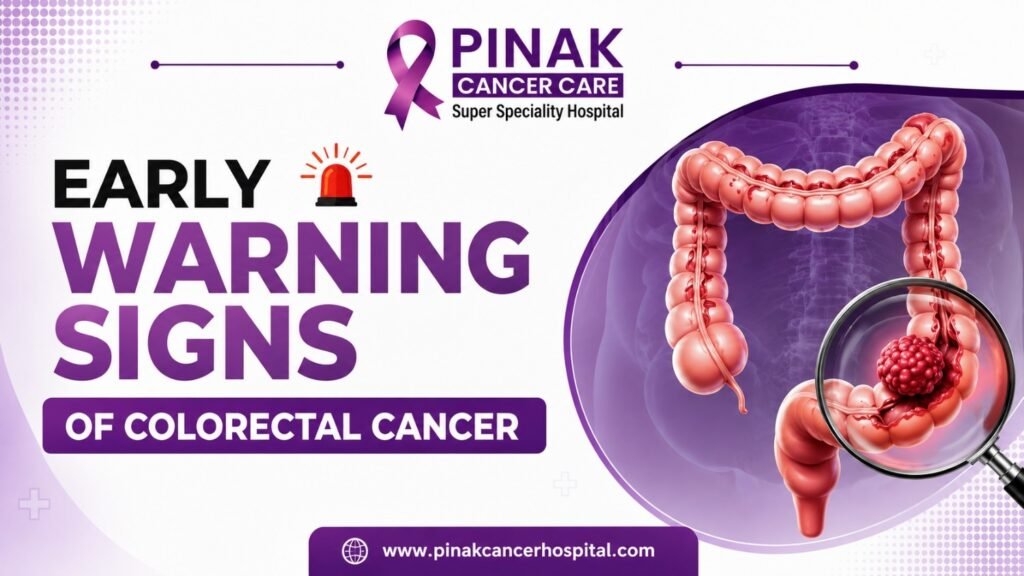
Have you noticed a change in your bowel habits, blood in your stool, ongoing stomach discomfort, or unexplained weight loss? These symptoms can happen because of many common health problems, but when they persist, they should not be ignored. Knowing the early warning signs of colorectal cancer can help you recognise important changes in your body and seek medical advice at the right time.
In this blog, we will explain the common colorectal cancer symptoms, what they may mean, who is at higher risk, and when you should see a doctor. We will also cover screening and diagnosis, so you can understand when a simple digestive problem may need further medical attention. Continue reading to learn the signs you should watch for and why early evaluation can make a difference.
What Is Colorectal Cancer?
Colorectal cancer is a type of cancer that starts in the colon or rectum, which are parts of the large intestine. The colon absorbs water and helps form stool, while the rectum stores stool before it leaves the body. When abnormal cells in these areas begin to grow out of control, they can form a growth called a polyp or tumour. Some polyps can become cancerous over time, which is why finding and removing certain polyps during screening can help lower the risk of colorectal cancer.
Colorectal cancer is also called colon cancer or rectal cancer, depending on where it begins. In its early stages, it may cause few or no noticeable symptoms, making awareness and appropriate screening important. When symptoms do appear, they may include changes in bowel habits, blood in the stool, abdominal discomfort, unexplained weight loss, or ongoing tiredness. Understanding these early warning signs of colorectal cancer can help people recognise changes that need medical attention.
What Are the Early Warning Signs of Colorectal Cancer?
The early warning signs of colorectal cancer can be different from person to person. Some people may have no clear symptoms in the early stages, while others may notice changes in their bowel habits or general health. Common colorectal cancer symptoms include blood in the stool, ongoing changes in bowel movements, abdominal pain, unexplained weight loss, and unusual tiredness. Having these symptoms does not mean you have cancer, but persistent or unexplained changes should be checked by a doctor.
1. Persistent Changes in Bowel Habits
A sudden or ongoing change in your usual bowel pattern can be an early sign of colorectal cancer. This may include:
- Constipation that does not improve
- Frequent or ongoing diarrhoea
- Alternating between constipation and diarrhoea
- Changes in how often you have a bowel movement
- A feeling that your bowel has not completely emptied
If these changes continue for several weeks without a clear reason, medical evaluation is important.
2. Blood in the Stool or Rectal Bleeding
Blood in the stool is one of the important colon cancer warning signs to pay attention to. It may appear as bright red blood or make the stool look dark or black. However, rectal bleeding can also occur because of haemorrhoids, anal fissures, or other digestive conditions.
Do not assume that bleeding is simply piles, especially if it is new, persistent, or occurs along with other symptoms.
3. Persistent Abdominal Pain or Bloating
Ongoing abdominal pain, cramps, discomfort, or bloating may sometimes be associated with colorectal cancer. These symptoms are common and can have many other causes, so they become more concerning when they are persistent or occur together with bowel changes, bleeding, or unexplained weight loss.
4. Unexplained Weight Loss
Losing weight without changing your diet, exercise routine, or lifestyle should not be ignored. Unexplained weight loss can occur with several health conditions, including cancer. If weight loss happens along with bowel changes or other colorectal cancer symptoms, speak with a healthcare professional.
5. Persistent Tiredness or Weakness
Feeling unusually tired or weak for a long time can sometimes be linked to iron-deficiency anaemia. Slow blood loss from the digestive tract may contribute to anaemia, even when you cannot see blood in your stool. Persistent fatigue, particularly when combined with other warning signs, should be evaluated.
6. Iron-Deficiency Anaemia
Iron-deficiency anaemia means the body does not have enough healthy iron to make sufficient haemoglobin. In some cases, unexplained anaemia can be linked to bleeding in the digestive tract.
If blood tests show unexplained iron-deficiency anaemia, particularly in an adult, a doctor may recommend further tests to identify the cause.
7. Narrow or Unusual Changes in Stool Shape
A persistent change in stool shape, such as unusually thin stools, can occur with different bowel conditions. Stool shape alone does not mean that a person has colorectal cancer. However, if the change continues or appears with bleeding, abdominal discomfort, or other bowel symptoms, it is worth discussing with a doctor.
8. Feeling That Your Bowel Has Not Fully Emptied
A repeated feeling that you still need to pass stool even after a bowel movement is another symptom that should not be overlooked. This feeling can have several causes, but persistent changes in bowel function should be medically assessed.
When Should You Take These Symptoms Seriously?
One symptom does not automatically mean colorectal cancer. However, you should consider medical evaluation if a symptom is persistent, unexplained, getting worse, or occurring together with other warning signs.
Remember that colorectal cancer can sometimes develop with few or no symptoms in its early stages. This is why appropriate screening and timely medical evaluation are important, especially for people with increased risk.
Can Colorectal Cancer Have No Symptoms in the Early Stage?
Yes. Colorectal cancer can develop with few or no noticeable symptoms in its early stages. This is one reason the disease can sometimes go undetected until it becomes more advanced. According to the World Health Organization (WHO), common colorectal cancer symptoms may include changes in bowel habits, blood in the stool, abdominal pain or bloating, unexplained weight loss, fatigue and iron-deficiency anaemia. However, some people may not experience these warning signs at first.
Why Can Early Colorectal Cancer Be Difficult to Notice?
Early colorectal cancer may cause only mild changes that are easy to overlook or confuse with common digestive problems. A person may feel generally healthy while abnormal cells or precancerous polyps are developing in the colon or rectum. This is why knowing the early warning signs of colorectal cancer is important, but it is equally important not to wait for symptoms before discussing screening with a doctor when screening is appropriate for your age and risk level.
Can Screening Detect Colorectal Cancer Before Symptoms Appear?
Yes. Colorectal cancer screening is designed to look for cancer or precancerous changes in people who do not have symptoms. Depending on a person’s age and risk factors, doctors may recommend tests such as stool-based screening or colonoscopy. Screening and diagnostic testing are different: screening is generally for people without symptoms, while persistent or concerning symptoms need medical evaluation.
Are These Symptoms Always a Sign of Colorectal Cancer?
No. Experiencing one or more early warning signs of colorectal cancer does not mean that you have cancer. Symptoms such as constipation, diarrhoea, abdominal pain, bloating, or blood in the stool can also occur due to common digestive problems. However, if a symptom is new, unexplained, persistent, or keeps coming back, it is important to consult a doctor rather than assuming it is harmless.
Common Conditions That Can Cause Similar Symptoms
Some non-cancerous conditions can cause symptoms similar to colorectal cancer symptoms, including:
- Haemorrhoids (piles): Can cause bright red blood during or after bowel movements.
- Anal fissures: Small tears around the anus that may cause pain and bleeding.
- Constipation: Can lead to hard stools, abdominal discomfort, and difficulty passing stool.
- Irritable bowel syndrome (IBS): May cause changes in bowel habits, bloating, cramps, constipation, or diarrhoea.
- Digestive infections: Can cause diarrhoea, abdominal pain, and changes in bowel movements.
- Inflammatory bowel disease (IBD): Conditions such as Crohn’s disease and ulcerative colitis can cause bowel changes and rectal bleeding.
When Should You See a Doctor for Possible Colorectal Cancer Symptoms?
If you notice possible early warning signs of colorectal cancer, do not panic, but do not ignore them either. Many symptoms can be caused by conditions such as piles, constipation, infections, or other digestive problems. However, persistent, unexplained, or worsening symptoms should be checked by a doctor, especially when more than one symptom occurs together.
See a Doctor If You Notice These Symptoms
You should consider medical evaluation if you have:
- Blood in the stool or rectal bleeding, especially if it keeps happening or has no clear cause.
- A persistent change in bowel habits, such as ongoing constipation, diarrhoea, or alternating between the two.
- Unexplained abdominal pain, cramps, or bloating that does not improve.
- Unexplained weight loss without changes to your diet or exercise.
- Persistent tiredness or weakness, which may sometimes be linked to iron-deficiency anaemia.
- A lasting change in stool appearance, such as unusually narrow stools.
- A feeling that your bowel has not emptied completely after a bowel movement.
- Several colorectal cancer symptoms occurring at the same time.
Can Young Adults Get Colorectal Cancer?
Yes, young adults can get colorectal cancer, although the risk generally increases with age. Because colorectal cancer is often associated with older adults, younger people may ignore symptoms or assume they are caused by piles, constipation, gas, or other common digestive problems. This can sometimes delay proper medical evaluation. Knowing the early warning signs of colorectal cancer is important at any age, especially when symptoms are new, persistent, or getting worse.
Colorectal Cancer Symptoms Young Adults Should Not Ignore
Young adults should speak with a doctor if they experience symptoms such as:
- Blood in the stool or rectal bleeding
- A persistent change in bowel habits
- Constipation or diarrhoea that does not improve
- Ongoing abdominal pain, cramps, or bloating
- Unexplained weight loss
- Persistent tiredness or weakness
- Iron-deficiency anaemia without a clear cause
- A feeling that the bowel has not emptied completely
- A lasting change in stool shape or frequency
What Tests Are Used to Diagnose Colorectal Cancer?
If you have early warning signs of colorectal cancer, such as blood in the stool, ongoing changes in bowel habits, unexplained weight loss, or persistent abdominal pain, a doctor may recommend tests to find the cause. No single test can confirm colorectal cancer in every case. The choice of test depends on your symptoms, medical history, age, and risk factors.
Medical History and Physical Examination
The first step is usually a consultation with a doctor. The doctor may ask about:
- Changes in bowel habits
- Blood in the stool or rectal bleeding
- Abdominal pain or bloating
- Unexplained weight loss
- Fatigue or weakness
- Family history of colorectal cancer or polyps
- Previous bowel problems or inflammatory bowel disease
A physical examination may also be performed to look for signs that need further testing.
Stool Tests
Stool tests can check for hidden blood that may not be visible to the naked eye. Common tests include:
- FIT (Faecal Immunochemical Test): Detects small amounts of blood in stool.
- FOBT (Faecal Occult Blood Test): Checks for hidden blood in stool.
A positive stool test does not mean that you have colorectal cancer. It usually means that further evaluation, often with a colonoscopy, may be needed to find the cause.
Colonoscopy
A colonoscopy is one of the most important tests used to examine the inside of the colon and rectum. A doctor uses a thin, flexible tube with a camera to look for:
- Colon polyps
- Abnormal growths
- Bleeding
- Inflamed areas
- Possible signs of colorectal cancer
One major benefit of colonoscopy is that doctors can often remove certain polyps or take a tissue sample during the same procedure.
Biopsy
If an abnormal area is found during a colonoscopy, the doctor may take a small tissue sample called a biopsy. The sample is examined in a laboratory by a pathologist.
A biopsy can help confirm whether abnormal cells are cancerous and can provide important information for planning further treatment.
Imaging Tests
If colorectal cancer is suspected or confirmed, imaging tests may be used to understand the location and extent of the disease. Depending on the situation, these may include:
- CT scan
- MRI
- Other imaging tests recommended by the medical team
Imaging is generally used to assess the tumour and check whether the disease may have spread to other areas.
Blood Tests
Blood tests do not usually diagnose colorectal cancer on their own, but they can provide useful supporting information. A doctor may check for anaemia, especially when there has been possible blood loss.
In some cases, a blood test may also include a tumour marker such as CEA (carcinoembryonic antigen). CEA is not suitable as a stand-alone test to diagnose colorectal cancer, but it may be useful for monitoring certain patients after diagnosis and treatment.
What Happens After the Tests?
The results are reviewed together with your symptoms, medical history, examination findings, and other test results. If colorectal cancer is confirmed, additional tests may be recommended to determine its stage and help doctors choose the most suitable treatment plan.
Colorectal Cancer Symptoms vs Common Digestive Problems
Digestive problems such as constipation, gas, diarrhoea, or stomach pain are common and often improve with simple changes in diet or routine. However, some colorectal cancer symptoms can look similar to these everyday problems. This can make it difficult to know when a symptom needs medical attention. The key is to look at how long the symptom lasts, whether it keeps coming back, and whether other warning signs appear at the same time.
How Can You Tell the Difference?
There is no single symptom that can confirm colorectal cancer. Many symptoms have non-cancerous causes, but persistent or unexplained changes should be checked by a healthcare professional.
| Symptom | Common Digestive Causes | When to Seek Medical Attention |
| Constipation | Low fibre intake, dehydration, lack of activity, some medicines | New or persistent constipation, especially with bleeding, pain, or weight loss |
| Diarrhoea | Infection, food intolerance, diet changes, IBS | Diarrhoea that continues, returns frequently, or occurs with blood in stool |
| Blood in stool | Haemorrhoids, anal fissures, infections | New, unexplained, or repeated rectal bleeding should be evaluated |
| Abdominal pain or cramps | Gas, indigestion, IBS, infection | Persistent or worsening pain, especially with other bowel changes |
| Bloating | Gas, certain foods, constipation | Ongoing bloating with other unexplained digestive symptoms |
| Change in stool shape | Temporary bowel changes or constipation | Persistent change, particularly when combined with other warning signs |
| Unexplained weight loss | Diet changes, stress, other health conditions | Weight loss without trying should be medically assessed |
| Fatigue | Poor sleep, stress, anaemia, other conditions | Persistent fatigue, especially with possible blood loss or anaemia |
When Could Digestive Symptoms Be a Warning Sign?
The early warning signs of colorectal cancer are more concerning when they are persistent, unexplained, or occur together. For example, a person with ongoing changes in bowel habits along with blood in the stool, abdominal discomfort, unexplained weight loss, or unusual tiredness should not simply assume it is indigestion or piles.
It is also important to remember that blood in the stool does not always mean colon cancer, and constipation does not automatically indicate cancer. Conditions such as haemorrhoids, anal fissures, irritable bowel syndrome, infections, and dietary changes can cause similar symptoms. However, persistent or unexplained symptoms deserve proper medical evaluation rather than self-diagnosis.
Why Choose Pinak Cancer Hospital for Colorectal Cancer Treatment?
Choosing the right cancer hospital is an important decision, especially when you are concerned about early warning signs of colorectal cancer or have already received a diagnosis. Under the expertise of Dr. Pankaj Singh, oncologist in Varanasi, Pinak Cancer Care & Superspeciality Hospital provides personalised cancer care with a focus on proper evaluation, treatment planning, and patient well-being.
Comprehensive Colorectal Cancer Care
At Pinak Cancer Care & Superspeciality Hospital, Dr. Pankaj Singh, cancer specialist in Varanasi, helps patients understand their diagnosis and available treatment options. Depending on the cancer stage and individual health needs, colorectal cancer treatment may include:
- Cancer evaluation and diagnosis based on symptoms and medical findings
- Personalised treatment planning according to the patient’s condition
- Chemotherapy when medically recommended
- Cancer surgery when appropriate
- Radiation therapy when indicated
- Follow-up care to monitor treatment response and recovery
Personalised Treatment Under Dr. Pankaj Singh
Every colorectal cancer patient has different medical needs. Symptoms such as blood in the stool, persistent bowel changes, abdominal discomfort, or unexplained weight loss do not always mean cancer, but they should be medically evaluated when they persist. Dr. Pankaj Singh, oncologist in Varanasi, focuses on understanding each patient’s condition before recommending an appropriate treatment approach.
Why Early Evaluation Matters
Recognising the early warning signs of colorectal cancer and seeking timely medical advice can help prevent unnecessary delays in diagnosis. If you experience persistent rectal bleeding, changes in bowel habits, unexplained weight loss, or other concerning symptoms, consulting Dr. Pankaj Singh, cancer specialist in Varanasi, can help you understand the appropriate next steps.
For those searching for colorectal cancer treatment in Varanasi, Pinak Cancer Care & Superspeciality Hospital offers comprehensive cancer care with treatment plans tailored to individual patient needs.
Also Read: https://pinakcancerhospital.com/early-symptoms-of-oral-cancer/
Conclusion
Knowing the early warning signs of colorectal cancer can help you take action when changes in your health should not be ignored.
Persistent bowel changes, blood in stool, abdominal pain, unexplained weight loss, and ongoing fatigue may need proper medical evaluation.
These symptoms do not always mean colorectal cancer, but delaying an evaluation can make it harder to identify the actual cause.
Screening and timely diagnosis are especially important for people with risk factors such as family history or previous bowel conditions.
If you notice persistent colorectal cancer symptoms, speak with a qualified cancer specialist instead of relying on self-diagnosis.
For patients seeking colorectal cancer treatment in Varanasi, Dr. Pankaj Singh at Pinak Cancer Care & Superspeciality Hospital provides personalised cancer-care guidance.
Early medical attention can help patients understand their condition and explore appropriate treatment options when needed.
Frequently Asked Questions
1. What are the early warning signs of colorectal cancer?
Common early warning signs of colorectal cancer include persistent changes in bowel habits, blood in the stool or rectal bleeding, abdominal pain or bloating, unexplained weight loss, fatigue, and iron-deficiency anaemia. Some people may have few or no symptoms in the early stages, so persistent changes should be medically evaluated.
2. What is usually the first sign of colon cancer?
There is no single first sign of colon cancer because symptoms can vary from person to person. A persistent change in bowel habits, rectal bleeding, abdominal discomfort, unexplained weight loss, or ongoing fatigue may be an important warning sign. Some people may not notice symptoms during the early stage.
3. Is blood in stool always a sign of colon cancer?
No, blood in stool does not always mean colon cancer. Conditions such as haemorrhoids, anal fissures, infections, and other digestive problems can also cause bleeding. However, unexplained, recurrent, or persistent rectal bleeding should be checked by a healthcare professional.
4. Can constipation be a sign of colorectal cancer?
Constipation has many common causes, including diet, dehydration, medications, and lifestyle changes. However, new or persistent constipation, especially when accompanied by blood in stool, abdominal pain, weight loss, or other bowel changes, should be evaluated to identify the underlying cause.
5. Can diarrhoea be a symptom of colorectal cancer?
Yes, persistent diarrhoea or a lasting change in bowel habits can be associated with colorectal cancer, but it can also result from infections, food intolerance, IBS, or other conditions. If diarrhoea continues, keeps returning, or occurs with bleeding or unexplained weight loss, seek medical advice.
6. Can colorectal cancer occur without symptoms?
Yes. Colorectal cancer can sometimes develop with few or no noticeable symptoms, particularly in its early stages. This is one reason appropriate screening is important, especially for people in recommended age groups or those with increased risk factors.
7. Can young adults get colorectal cancer?
Yes, young adults can develop colorectal cancer, although the risk generally increases with age. Persistent rectal bleeding, unexplained weight loss, abdominal pain, anaemia, or changes in bowel habits should not be ignored simply because someone is young.
8. When should I see a doctor for colorectal cancer symptoms?
You should consider medical evaluation if you have persistent changes in bowel habits, blood in stool, unexplained weight loss, ongoing abdominal pain, fatigue, or iron-deficiency anaemia. Having these symptoms does not confirm cancer, but a doctor can help determine the actual cause and recommend appropriate tests.
10. How is colorectal cancer diagnosed?
Diagnosis may involve a medical history, physical examination, stool-based tests, colonoscopy, and biopsy when appropriate. Additional imaging tests may be recommended to understand the extent of disease after cancer is suspected or confirmed. The exact tests depend on the patient’s symptoms and medical findings.
11. What age should colorectal cancer screening start?
The appropriate screening age depends on a person’s risk and the guidelines being followed. India’s 2024 National Cancer Screening and Early Diagnosis Guidelines identify 45–75 years for colorectal cancer screening in average-risk adults. People with higher risk may need an earlier or different screening plan.
12. Is colorectal cancer curable if detected early?
Colorectal cancer can often be treated effectively, particularly when it is detected before it has spread extensively. However, treatment and outcomes depend on factors such as cancer stage, tumour characteristics, overall health, and response to treatment. A cancer specialist can explain the expected treatment options for an individual patient.
13. Where can I get colorectal cancer treatment in Varanasi?
Patients looking for colorectal cancer treatment in Varanasi can consult Dr. Pankaj Singh at Pinak Cancer Care & Superspeciality Hospital. The hospital provides comprehensive cancer care, including personalised treatment planning and appropriate options such as chemotherapy, surgery, and radiation therapy based on the patient’s condition.